How has water shaped modern Singapore?
As cities across Asia face heavier rainfall and rising seas, the question is no longer how to control water, but how to work with it. Landscape architects Cathy Hang and Agnes Chain trace two decades of water-sensitive design in Singapore and what it means for a city to treat water as part of its structure.

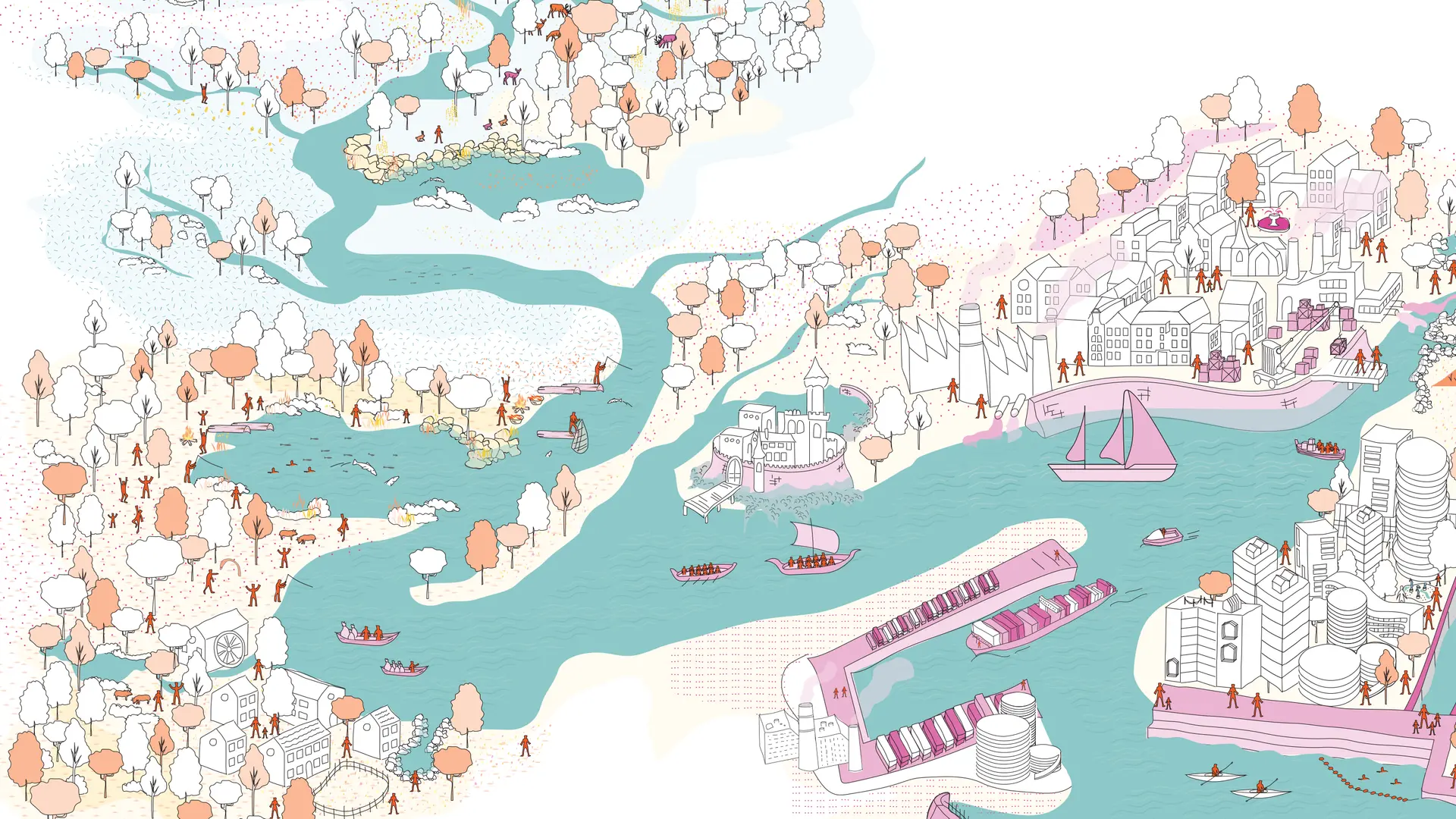
Water has long shaped Singapore, with tidal creeks, freshwater streams, and mangroves determining where people settled, traded and functioned throughout history. Modernization has shifted this, swamps have been drained, rivers straightened and coastlines reclaimed. New concrete channels protect homes and public health but also push water out of sight and everyday life.
As part of a long collaboration with PUB, Singapore’s national water agency, we have been part of rethinking that relationship, treating water as a system to work with rather than a risk to remove. Through the Active, Beautiful, Clean Waters Program, we developed design guidelines drawing on water-sensitive urban design and tailored to Singapore’s climate. These guidelines set standards for bioretention basins, vegetated swales, cleansing wetlands, and infiltration systems, bringing these principles into mainstream planning for the first time.
This thinking has since taken shape across a series of projects in the city. Taken together, they trace a shift from water as managed threat to water as urban structure.
Retaining water and history
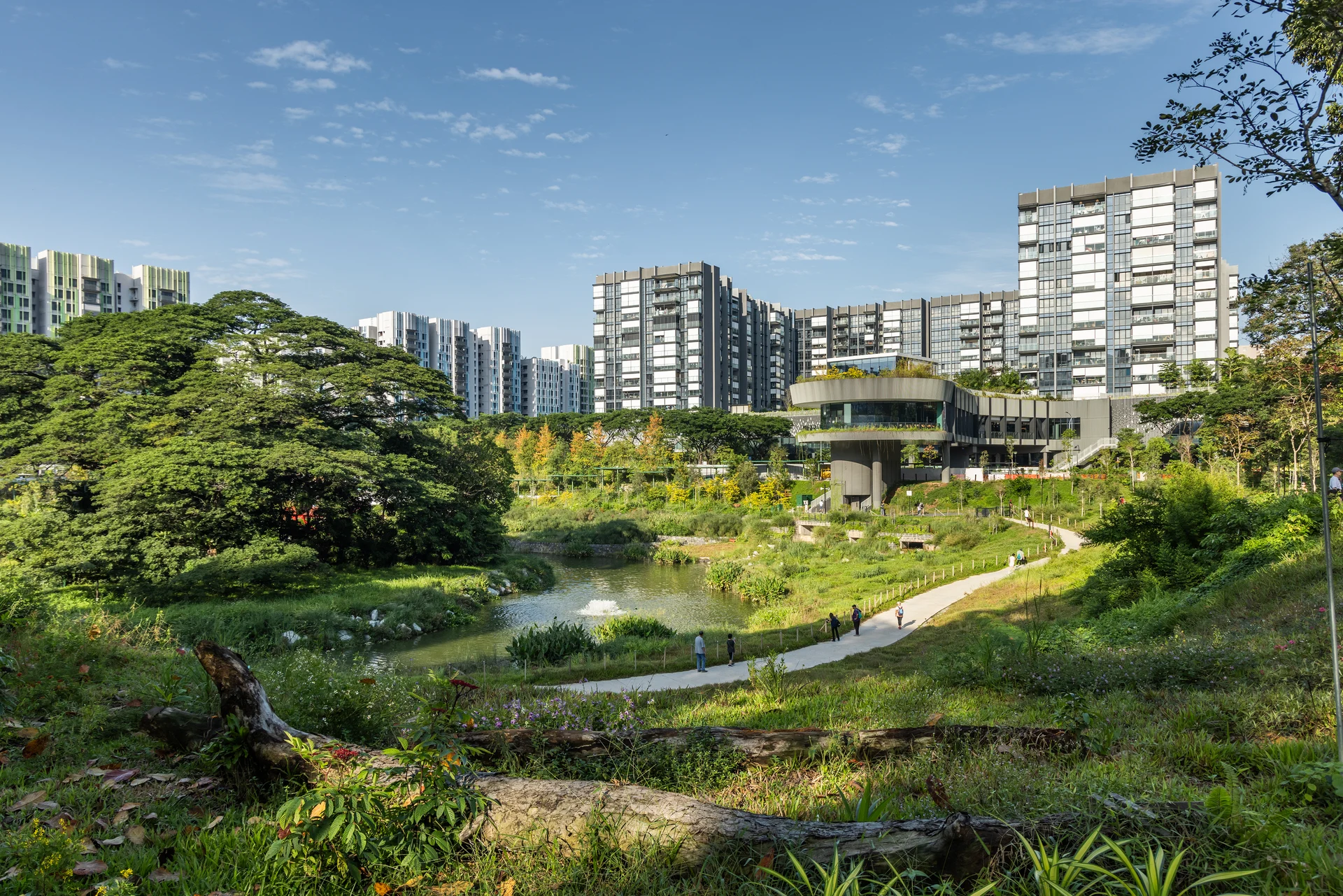
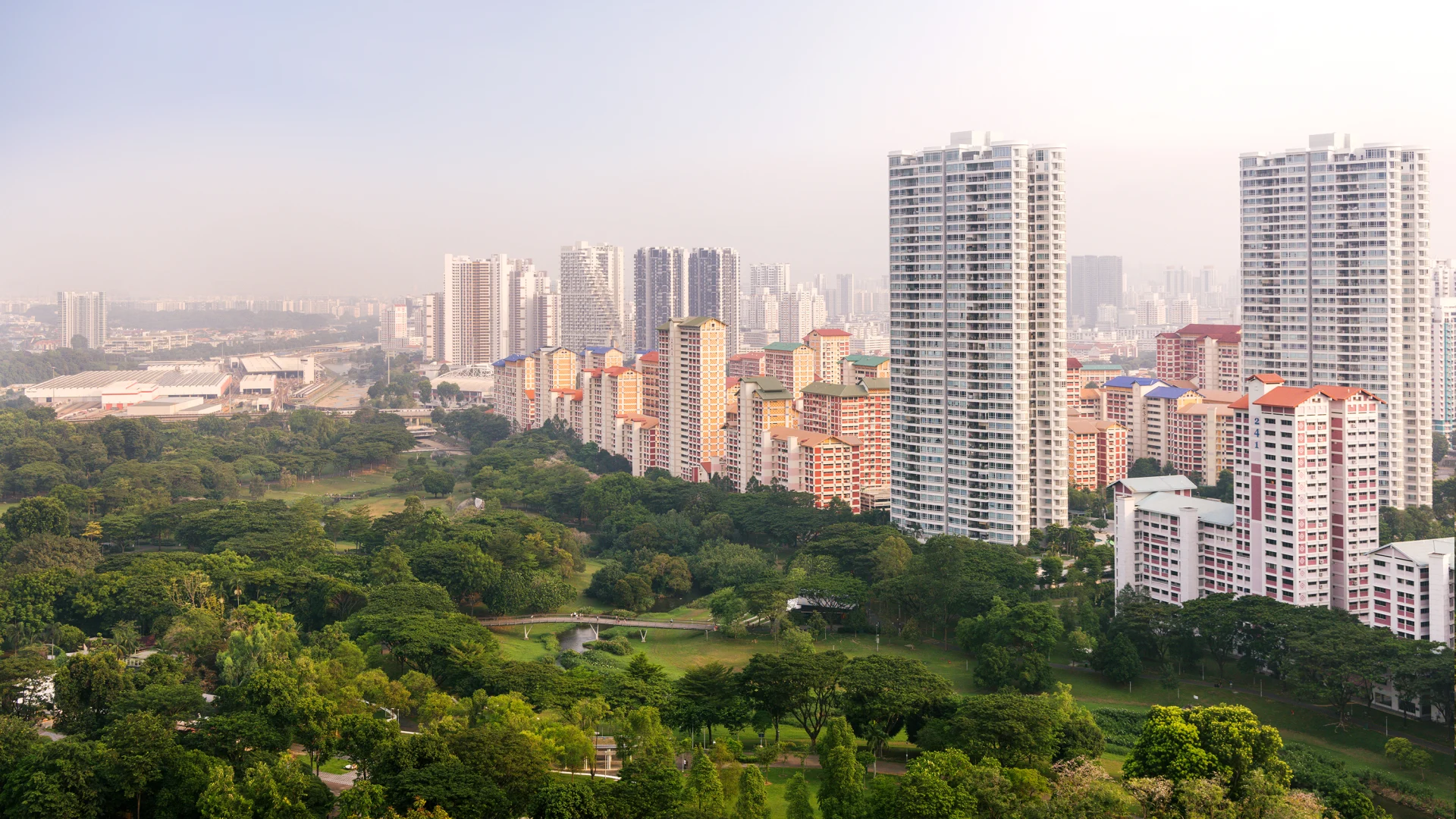
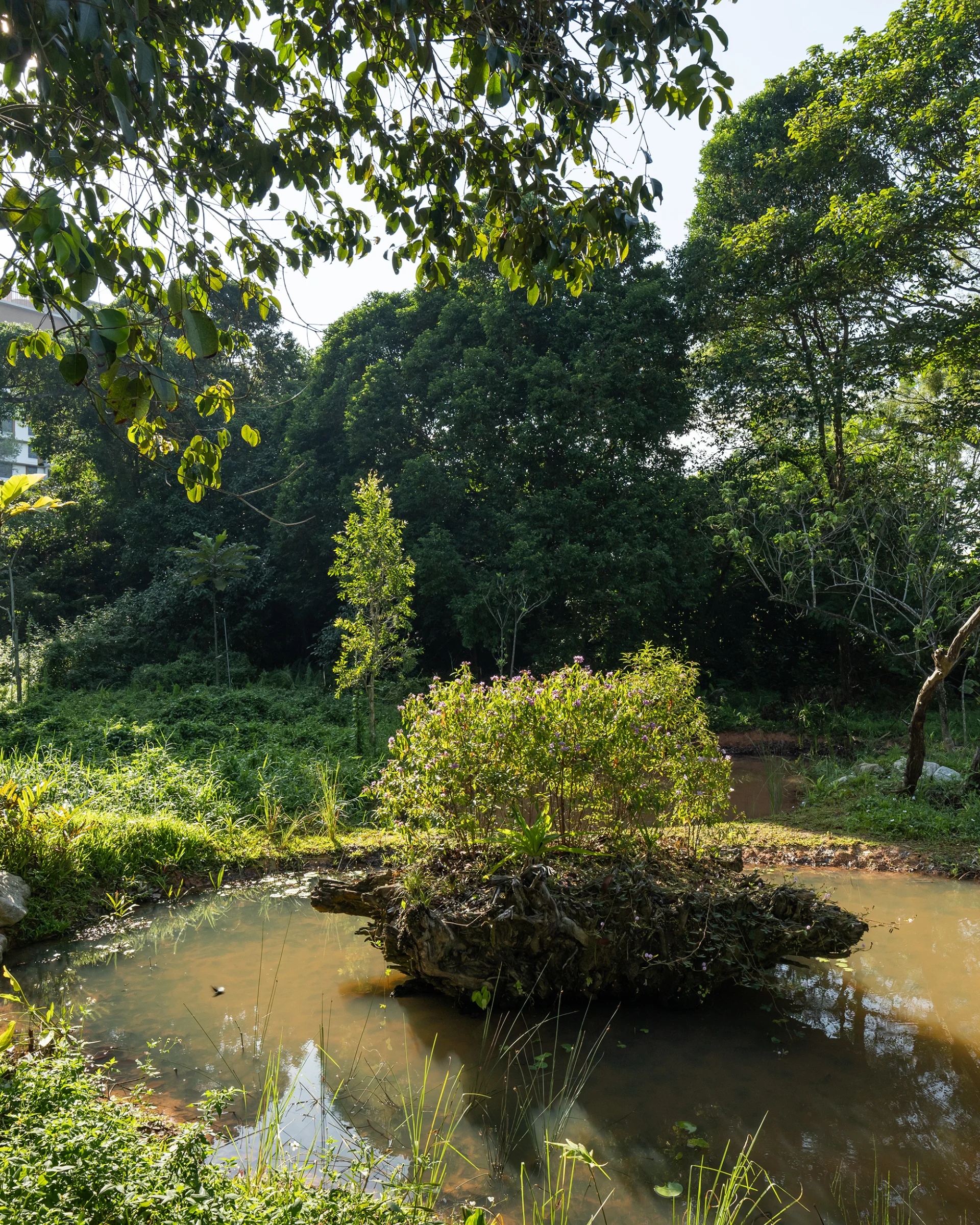
At Bidadari Park, the design premise is retention of both water and what was already there. Set within a new housing estate on a former cemetery and mature woodland, Alkaff Lake is engineered for a 1-in-25-year storm, rising up to 4 meters to hold the equivalent of 16 Olympic pools. Natural swales replace hard drains, and an ephemeral marsh appears during storms.
Excavated clay lines the marshlands, and felled trees have become furniture and habitat logs. The park now supports more than 193 wildlife species, including 160 bird species. The return of the White-throated Kingfisher signals a healthier ecosystem, tended by a growing community of birders and visitors.
Moving water through architecture
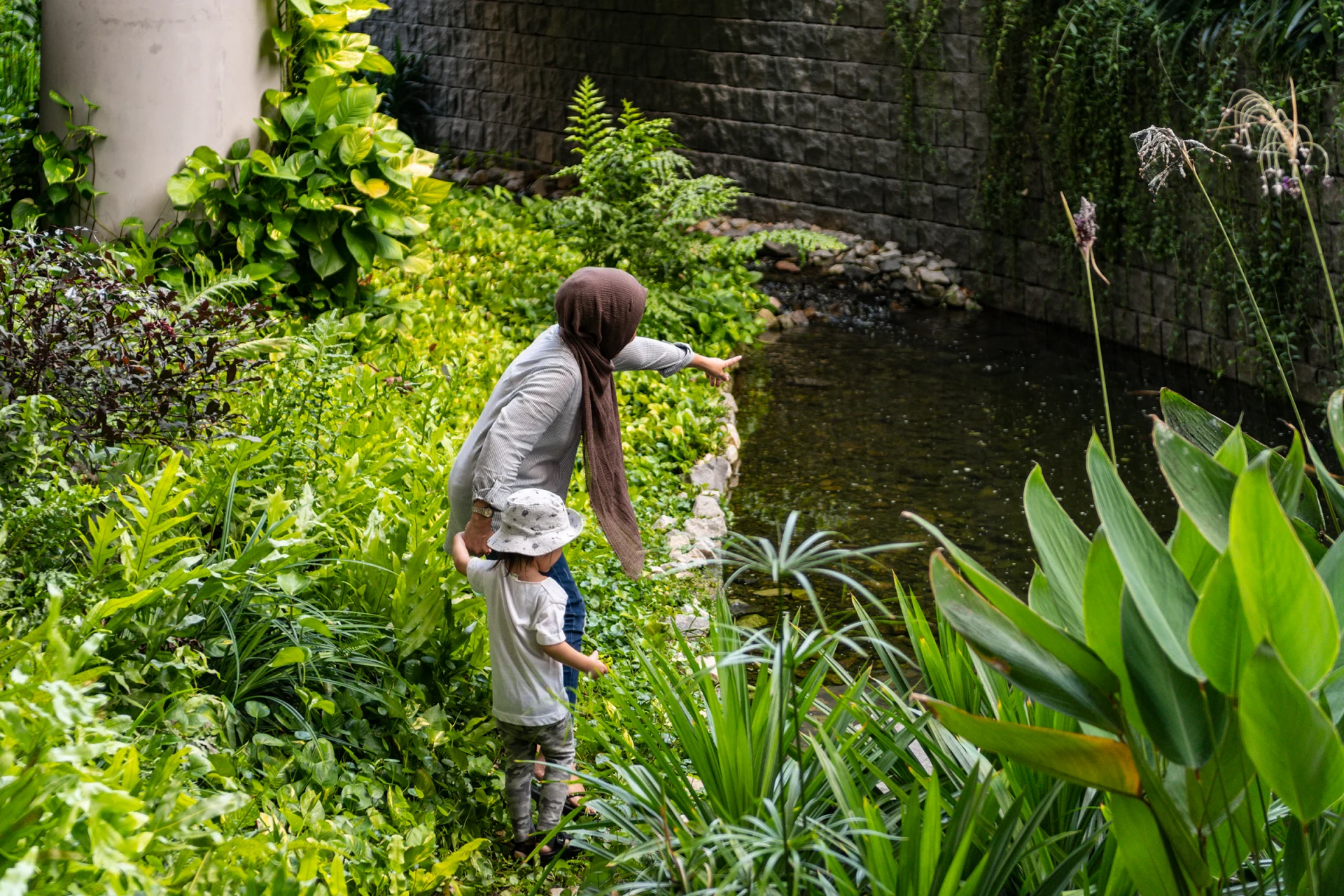
Inspired by the traditional kampung, where wells and streams were gathering points, Kampung Admiralty, Singapore’s first retirement village, is an 11-story vertical village on a 0.9-hectare site, combining housing, healthcare, retail, and shared gardens, with greenery covering 53% of the plot.
Rainwater flows down the building with gravity through swales, bioretention media, and harvesting tanks, and is reused for irrigation, with an eco-pond and cleansing biotope at ground level completing the cycle.
Reimagining the waterway
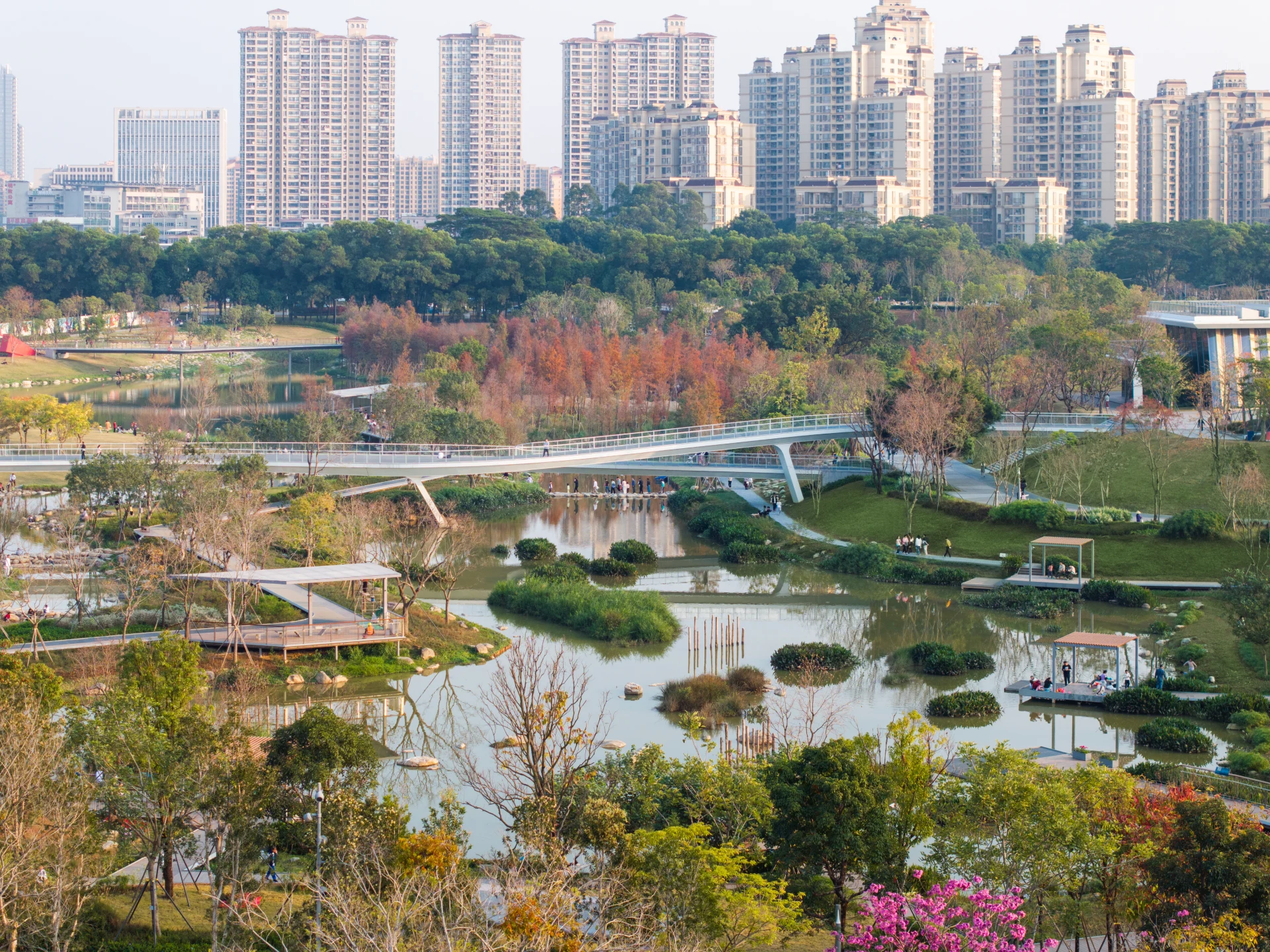
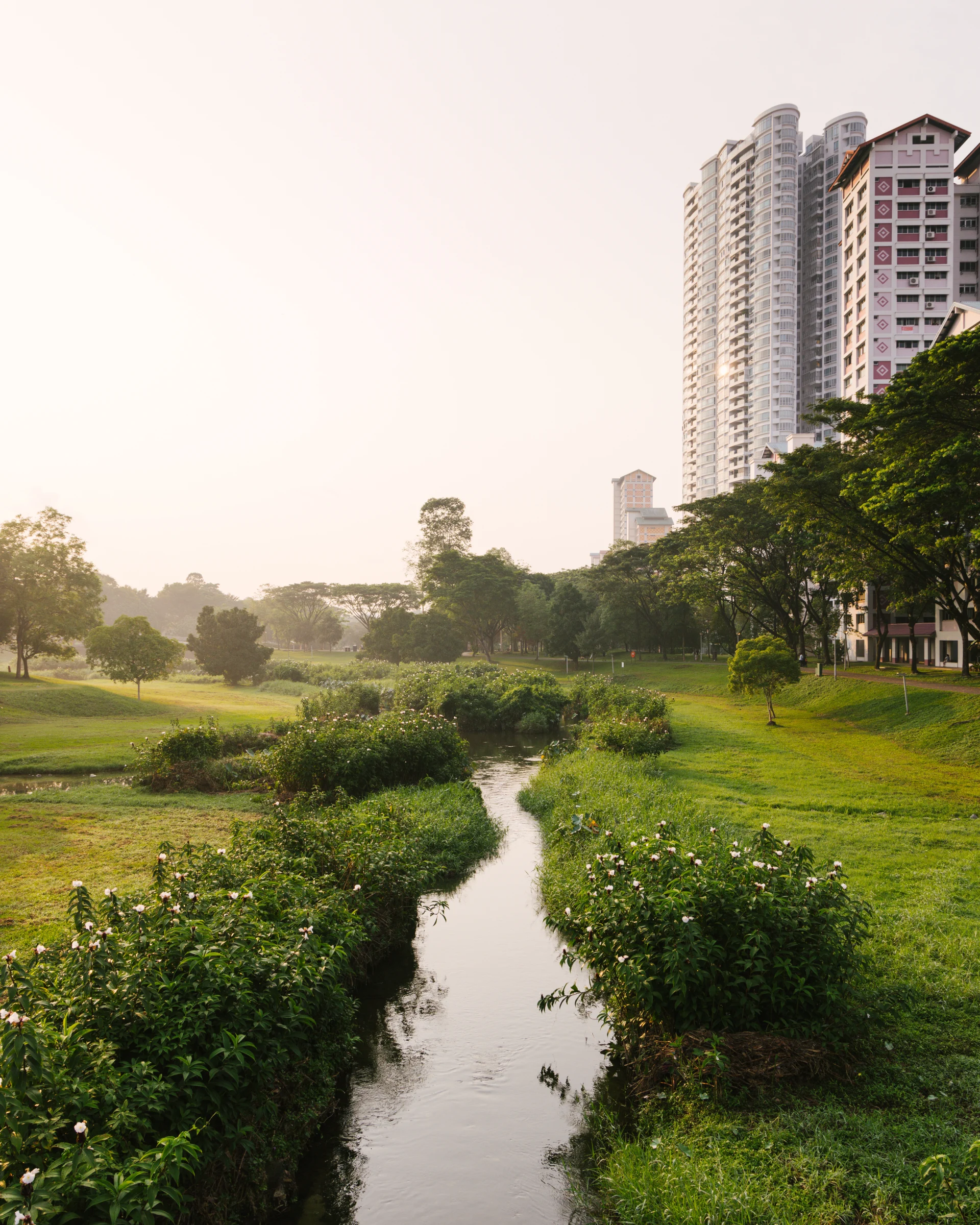
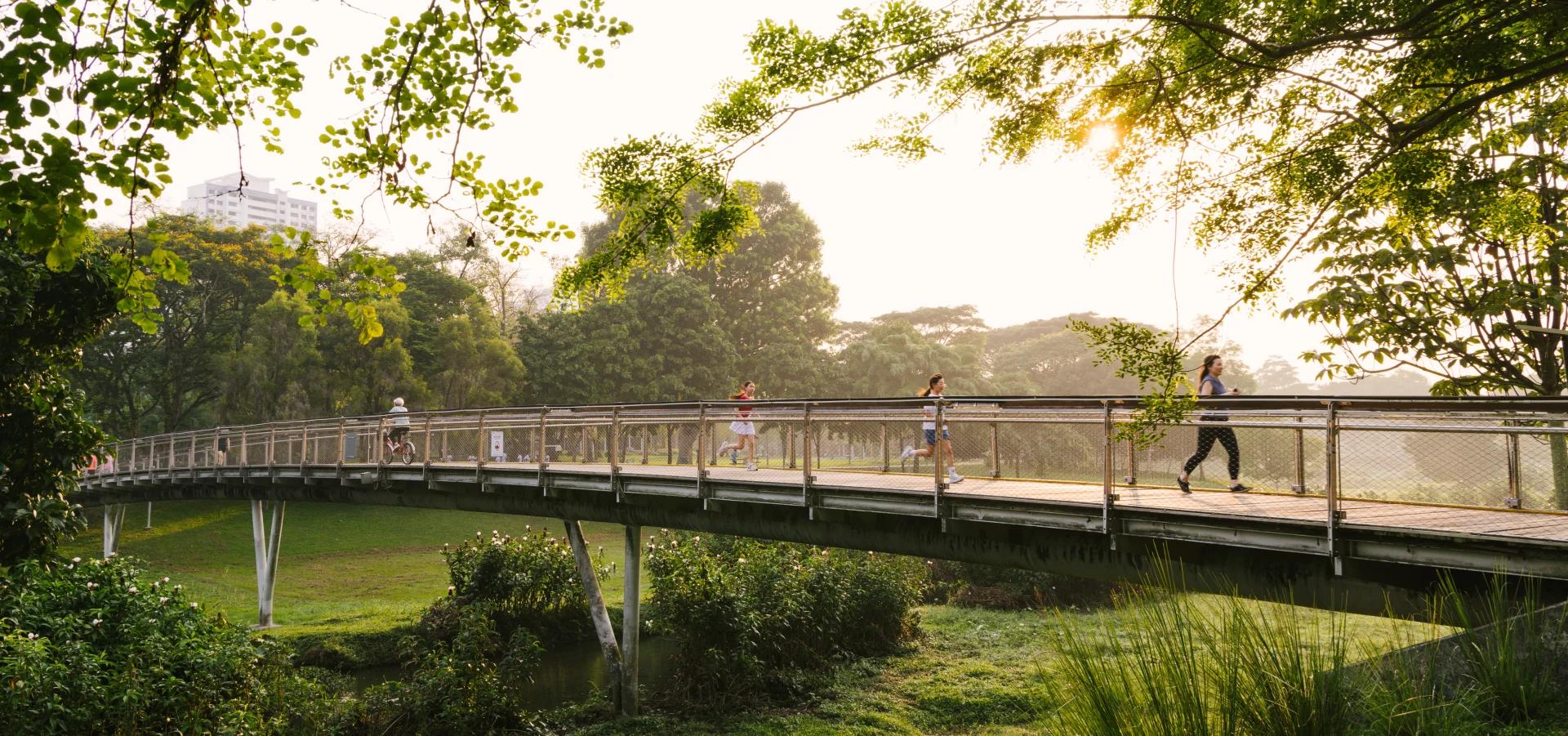
Between 2009 and 2012, the Kallang River at Bishan-Ang Mo Kio Park was transformed from a 2.7-kilometer concrete canal, walled off from neighboring estates, into a 3.2-kilometer meandering, naturalized river. The change asked a fundamental question about safety: whether barriers were necessary, or whether shallow edges, slowed water, and planned flood zones could do the same work while keeping the river part of everyday life. Hydraulic modeling and iterative testing showed they could. The river’s banks now act as floodplain during storms and as lawns, sports fields, and gathering spaces otherwise. Rising stormwater signals the system working as designed.
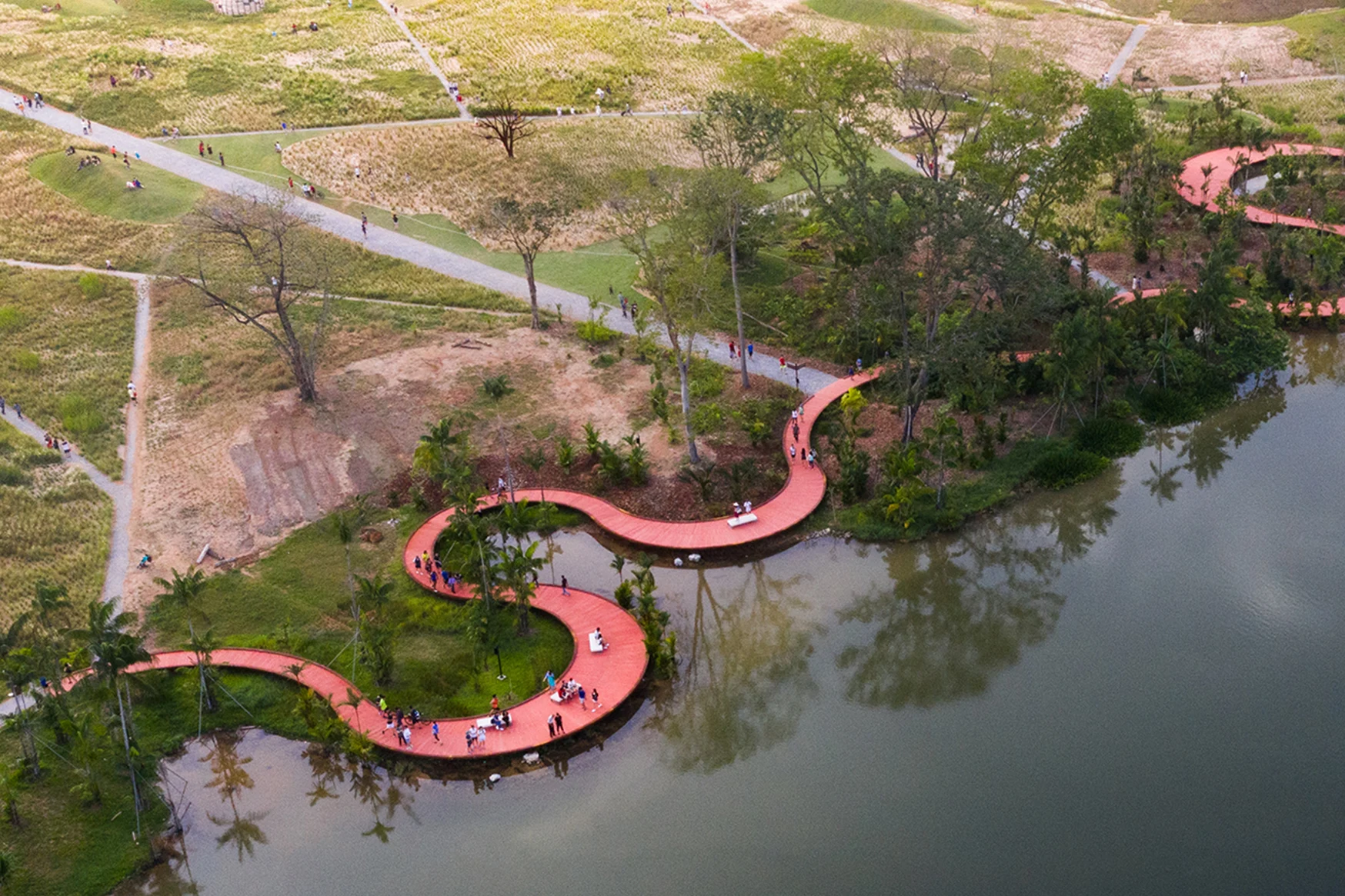
Water as a living landscape at Jurong Lake Gardens
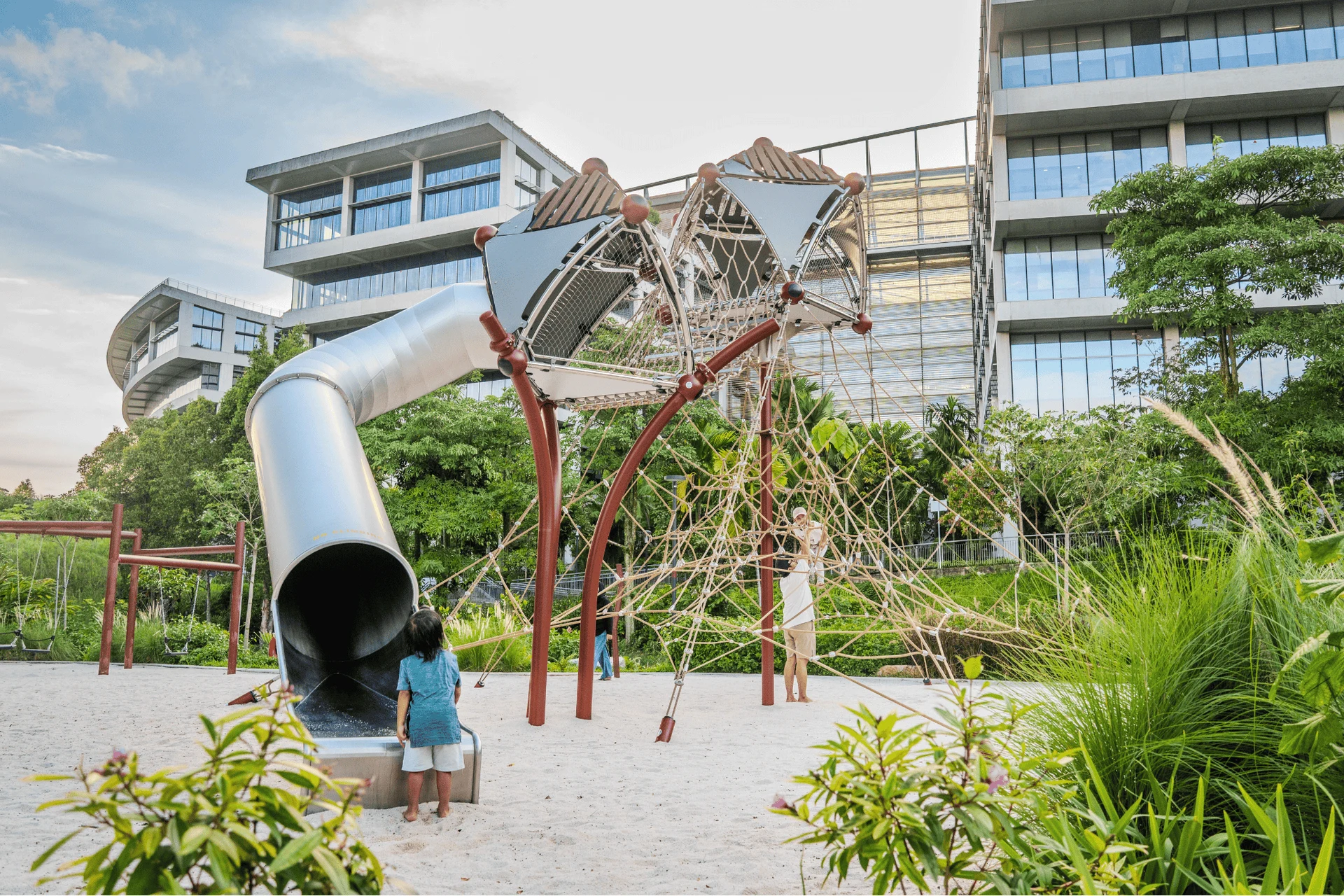
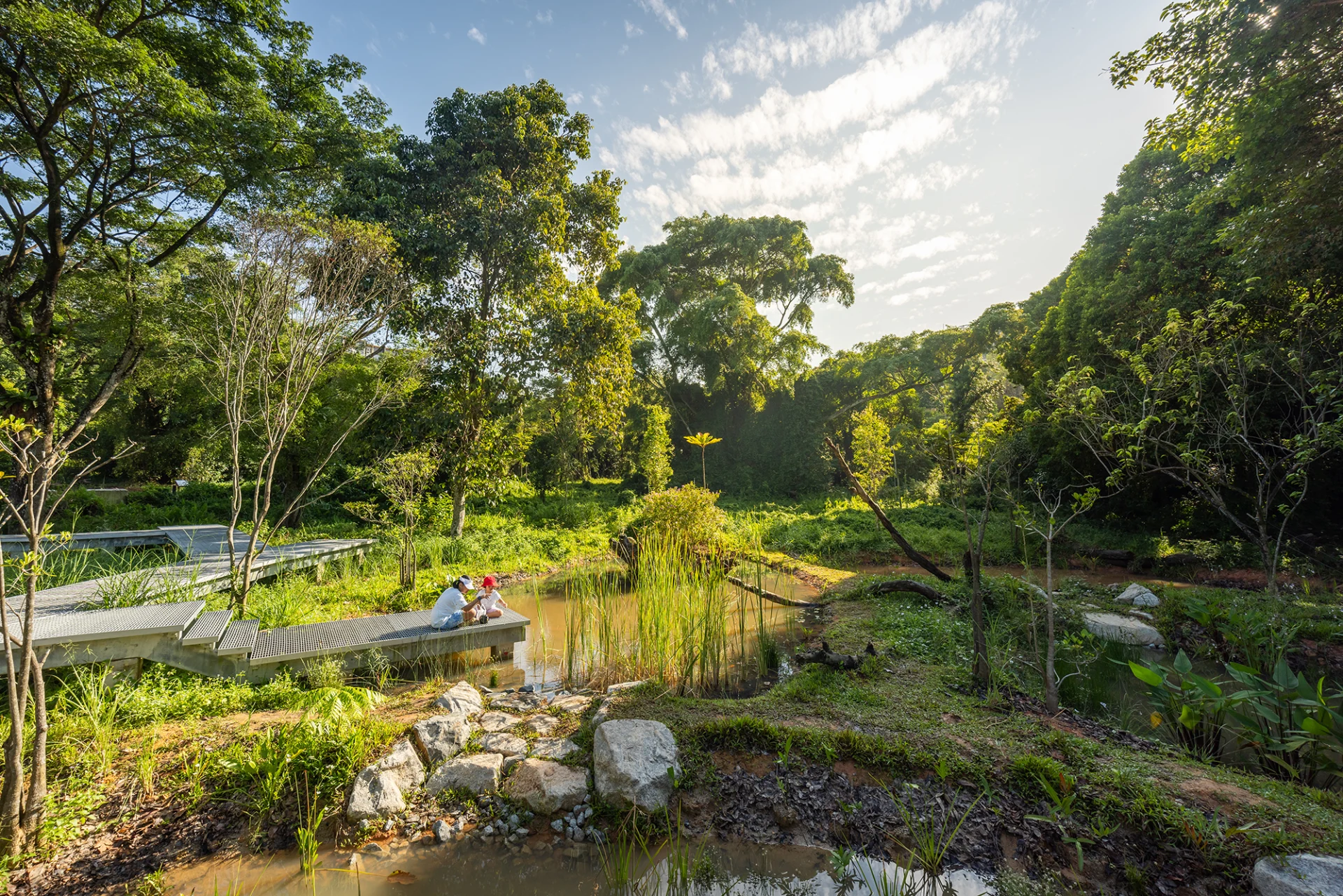
Opened in 2019 as Singapore’s first national garden in the heartlands, the 56-hectare Lakeside Garden, located in Jurong Lake Gardens West, restores the freshwater swamp forest that predated industrialization making water both visible and something for visitors to interact with. Concrete drains were replaced with 4,750 meters of naturalized swales and streams, so the entire catchment now passes through water-sensitive features before reaching Jurong Lake. Play is built in too: Clusia Cove, Singapore’s first closed-loop nature-based water playground, cleanses lake water through a biotope before children use it, while Forest Ramble turns the movement of swamp animals into an invitation to explore.